
 Home
Home23 May 2025

Hui attendees gathering outside Wairewa Marae
Only days before floodwaters enveloped the streets of Little River in early May, researchers, local community members and Iwi representatives from across Horomaka Banks Peninsula gathered at Wairewa Marae to discuss the health and wellbeing of their environment. This hui, hosted by Bioprotection Aotearoa, was an opportunity to share the research progress centred on Horomaka Banks Peninsula.
While scientific results provided a broader context, Director Amanda Black (Te Whanau-a-Āpanui, Tuhoe) noted this hui was more about the relationships between people, place and research.
“This hui was important, as it reminds us that research has context and communities provide that context.”
Though some scientific discussions were complex, the beauty of Wairewa Marae and the process of whakawhanaungatanga created a relaxed and welcoming atmosphere that set the tone for the day.
Huata Arahanga (Ngārauru-kii-tahi), who chaired the event, reflected on the strength of the engagement.
“It was a true highlight witnessing how diverse community stakeholders, including Iwi representatives, came together and participated in lively discussions. One of the aunties was amazed by the level of noise during the lunch break, where people usually stop to eat and forget about talking.”
Collaboration and reflection

Hui underway inside the wharenui.
Connections and conversations focused on how the research of Bioprotection Aotearoa is responding to the environmental challenges facing Horomaka Banks Peninsula.
As researchers shared insights and listened to local perspectives, questions naturally emerged: How can communities be more involved in shaping future research? What role might mana whenua, landowners and environment groups play in feeding the future research?
These open discussions challenged us, as a national Centre of Research Excellence, to reflect on how we can strengthen our connections with communities and create more opportunities to for them to contribute meaningfully to our research. They also prompted us to consider how the knowledge we are building can remain relevant and valuable, even when it’s not at the stage of direct application.
Scientific insights from the whenua
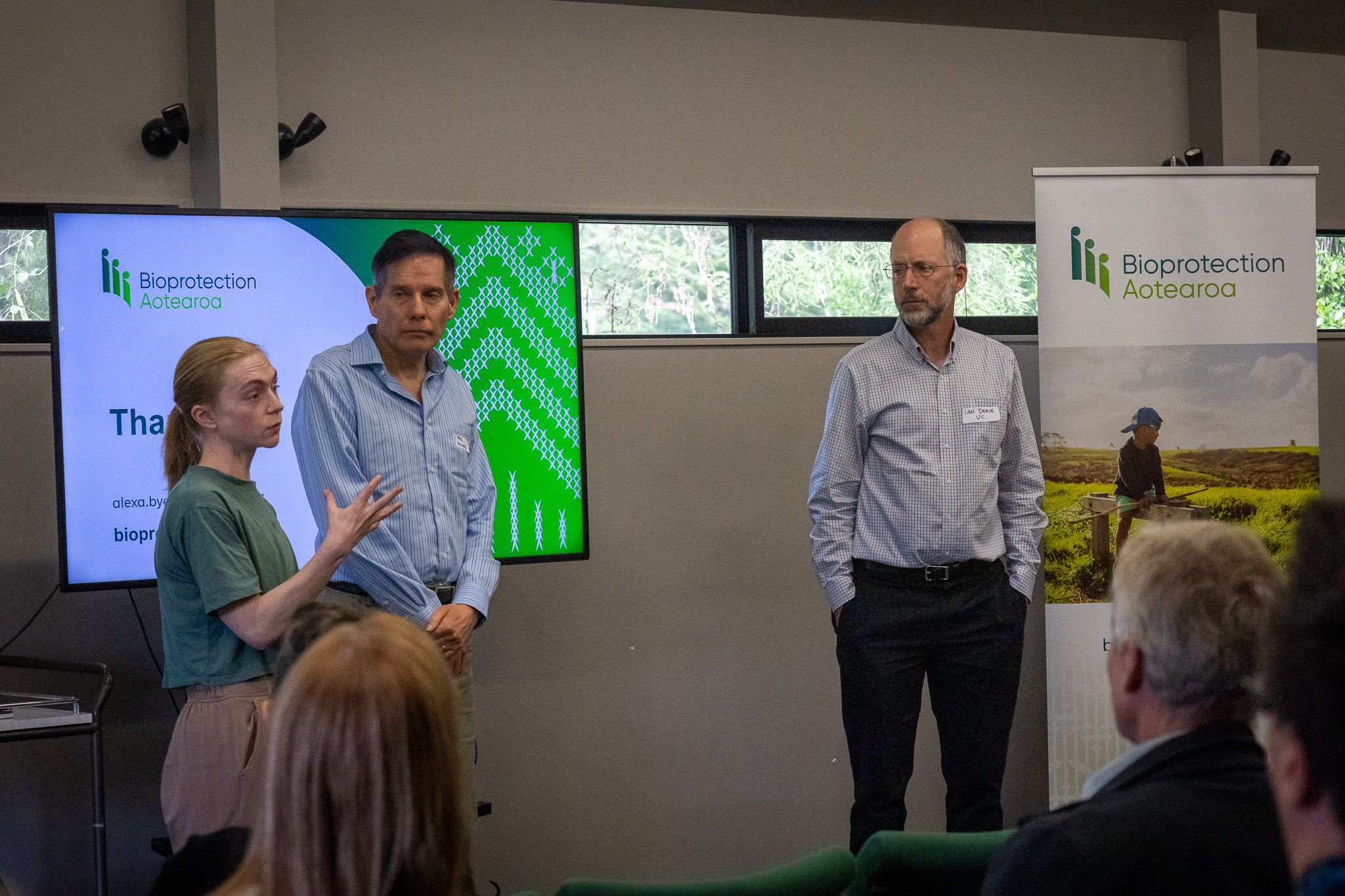
Researchers Dr Alexa Byers, Distinguished Professor Philip Hulme and Professor Ian Dickie
Each research team took the opportunity to share deeper insights into their work, presenting to a curious and engaged audience. Kānuka shrublands took centre stage in many of the presentations and sparked thoughtful discussion throughout the day.
Professor Ian Dickie (University of Canterbury) opened the session by asking: what makes kānuka shrublands healthy? His team shared findings from their sampling of kānuka forest fragments across 30 sites on Horomaka Banks Peninsula.
Their results revealed a rich diversity of microorganisms in both soil and leaf litter, including bacteria, fungi and oomycetes, which are commonly described as water moulds.
But ecosystem health, they explained, goes beyond identifying potential pathogens. It’s about understanding how ecosystems function, how they grow, support biodiversity and evolve over time.
Distinguished Professor Phillip Hulme (Lincoln University) explored the role of landscape attributes in shaping weed incursions.
His team’s work focuses on non-native plant invasions in native forests and shrublands, particularly what drives the success or failure of alien weed species establishing in kānuka ecosystems.
PhD student Friederike Epinoza (Lincoln University) added that the size of kānuka shrubland fragments plays a key role in their vulnerability to invasive weed species. She suggested that restoration efforts should prioritise expanding and connecting existing forest fragments to build resilience.
Dr Alexa Byers, a Postdoctoral Fellow at Lincoln University, discussed how carbon levels are a key indicator of soil health and play an important role in supporting plant growth and improving water retention.
Her research examined carbon storage in the top 10 cm of soil across different land uses in Kaituna Valley. The discussion raised interest in deeper carbon reserves — a focus of her next phase of work, which will investigate soil carbon down to one metre to better understand how land use affects carbon at depth.
The role of social science
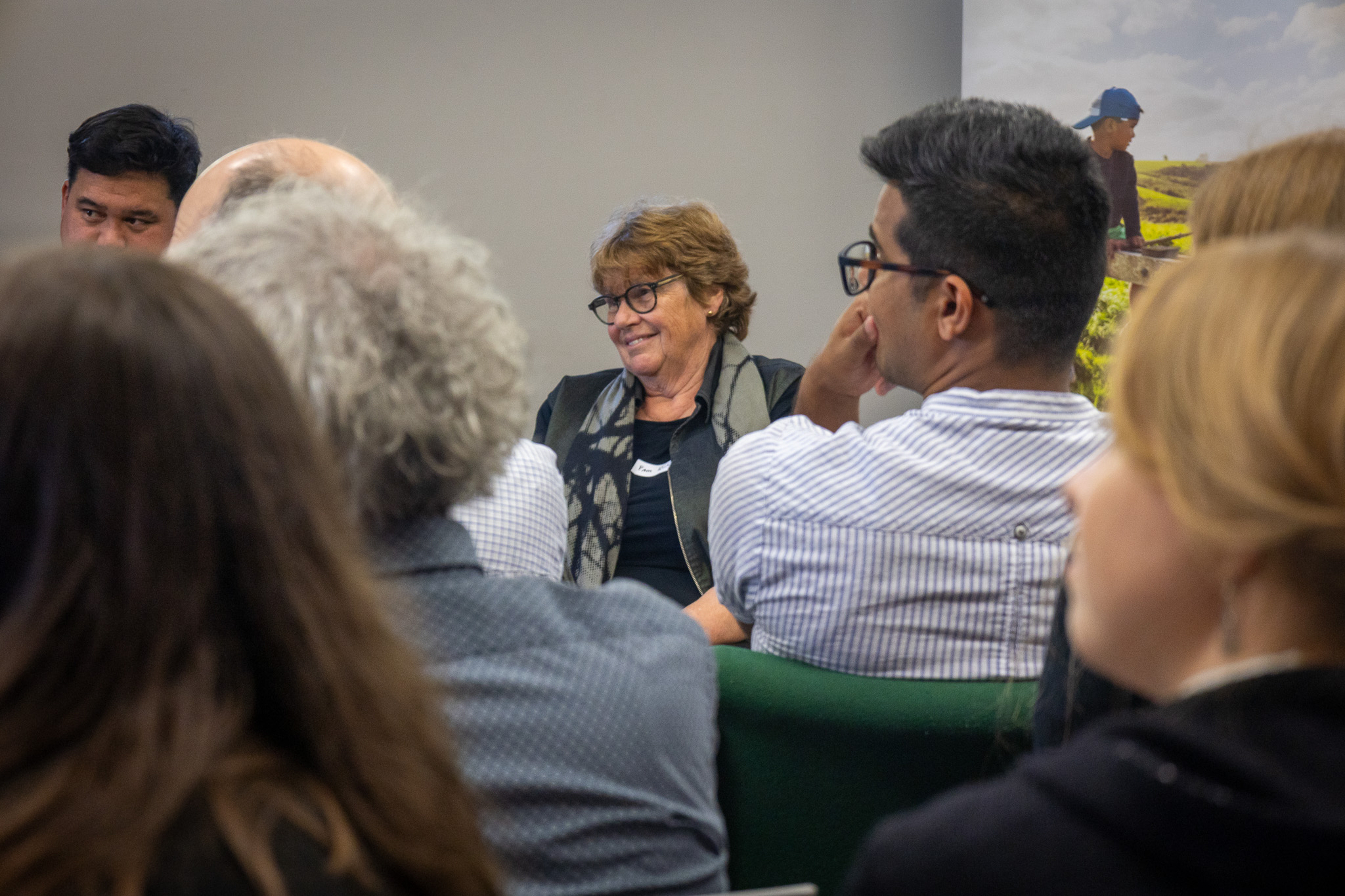
Joining in the panel discussion Pam Richardson
Dr Marc Tadaki (Lincoln University) who co-leads a new project centred on social science, joined the post-lunch panel to discuss how these perspectives are being woven into the wider research programme. The audience’s response clearly affirmed the value of this work.
“Several people came up to me afterwards and said it’s really great to hear that social sciences are part of the team,” he shared. “This feedback is important, especially as these are not your abstract- or policy-type people. These are weed contractors telling us that social science is important, and it’s what needs to be worked on.”
This sentiment echoed a broader recognition: that social dimensions are essential for understanding and responding to complex environmental challenges.
Supporting the next generation of bioprotection leaders
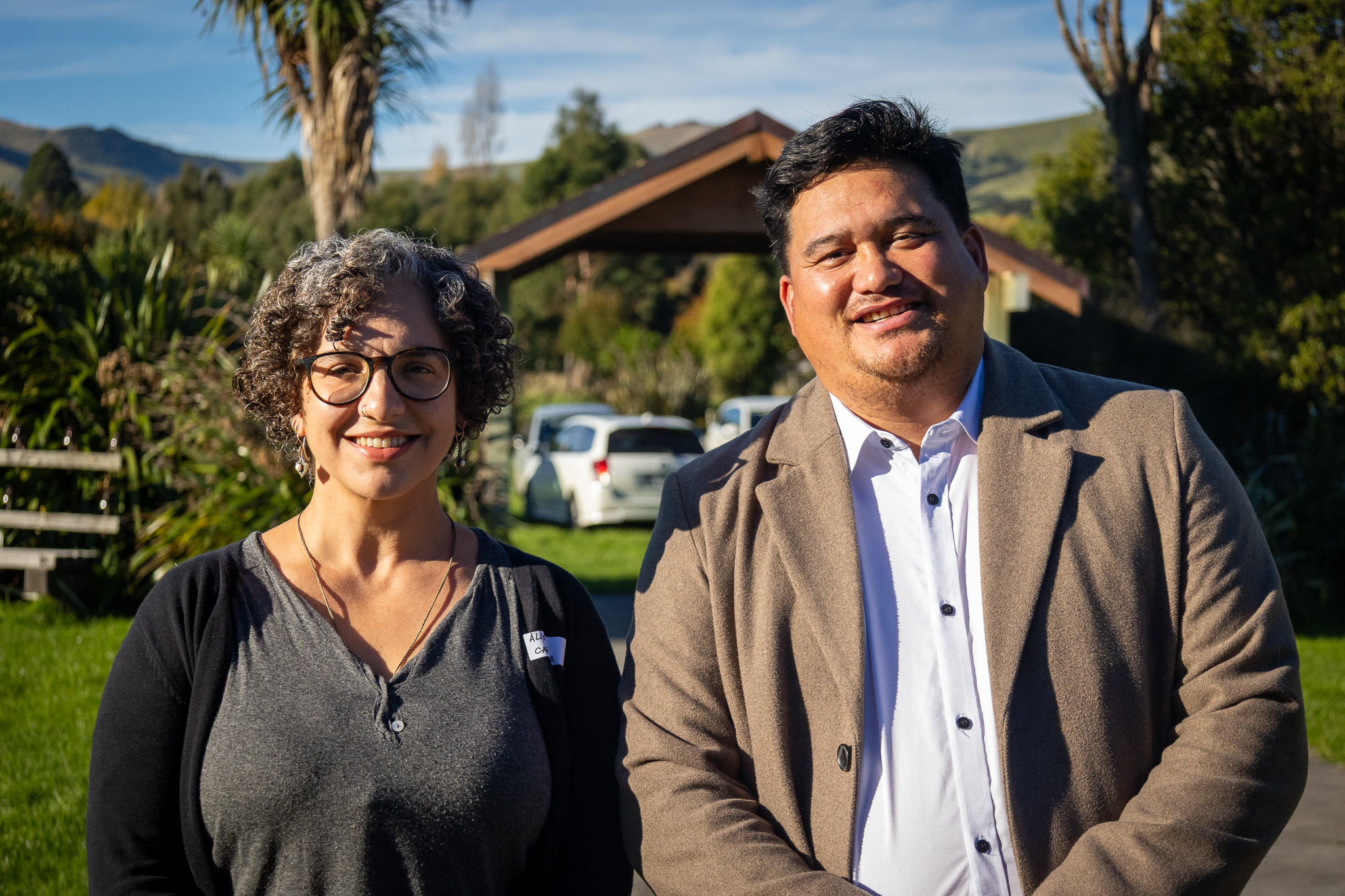
Dr Aline Carrara with Kenny Brown
The hui also provided a valuable platform for early career researchers to take the lead in sharing their work and connecting it to real-world contexts in meaningful ways. As a supervisor, Professor Hulme expressed pride in seeing his Postdoctoral Fellow and PhD student engage with community members — actively listening and drawing on local knowledge to inform their work.
“It’s great to see them at a stage of their careers where their work is valued and making a real contribution.”
Closing with intent
The hui closed with a poroporoaki, a farewell grounded in reflection. It signified the value of the day, and the connections forged. The ripple effects were already evident, as many attendees expressed plans to share what they had learned with their own networks and a strong interest in future hui and collaboration.
Hui highlights and downloads
You can view a selection of photos from the day here >>
Download a PDF copy of the presentations shared during the hui here >>
Catch the highlights from our hui on Tahu News – available on Facebook or Instagram.