
 Home
Home19 December 2025
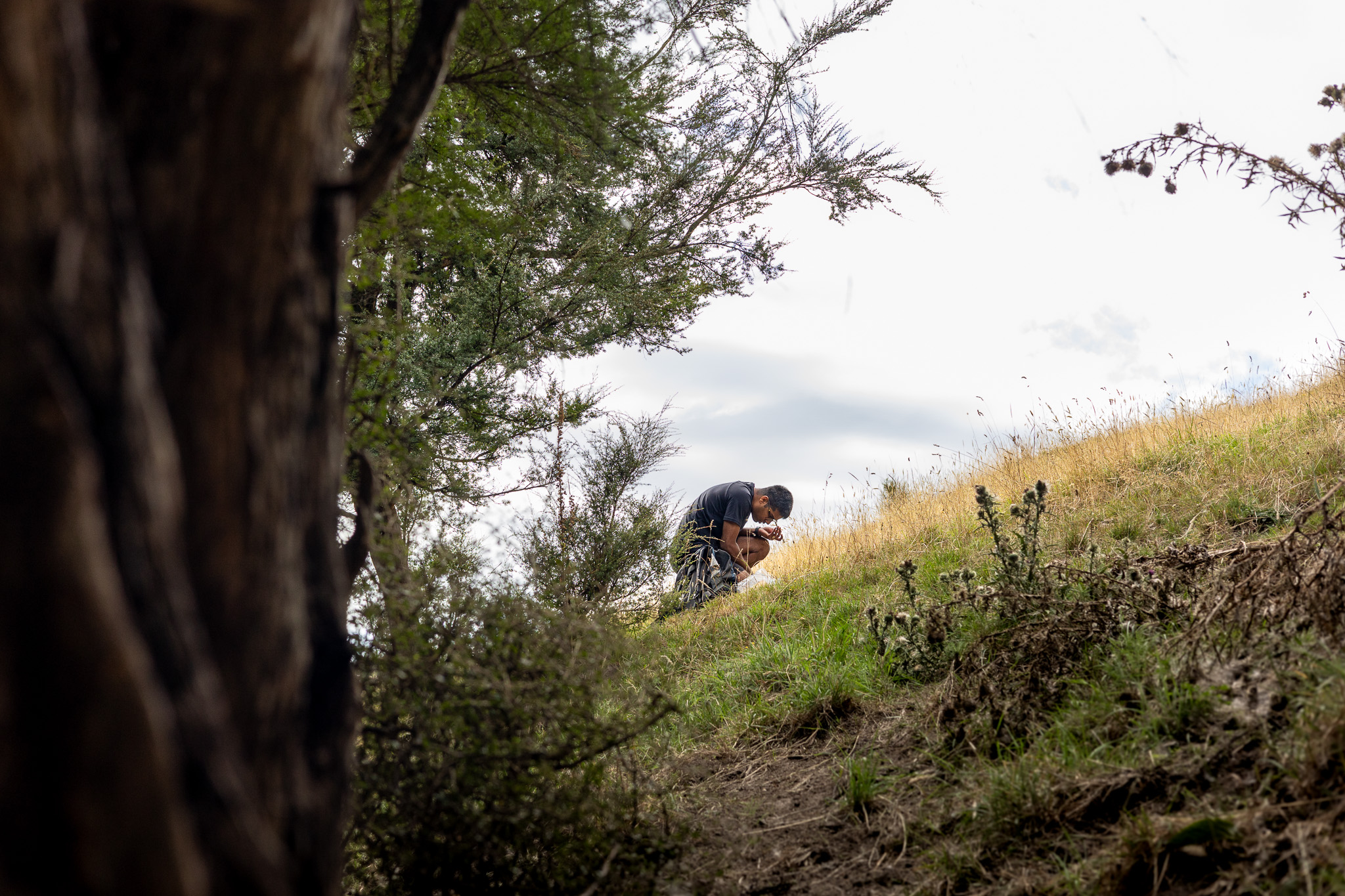
Postdoctoral Fellow Dr John Ramana (University of Canterbury), sampling a kānuka site, and gathering evidence needed to understand ecosystem resilience.
Postdoctoral Fellow Dr John Ramana (University of Canterbury) wanted to paint a picture of what healthy kānuka looked like, but his team got a lot more than they bargained for.
In their latest research, John and his team wanted to find out what the microorganisms associated with healthy kānuka stands look like, including some peculiar “water moulds” called oomycetes.
“Oomycetes are a really distinct group of eukaryotic microbes,” John says, “They’re important in terms of maintaining ecosystem biodiversity, because many of them are really devastating plant pathogens (such as the one that causes Kauri Dieback).”
Despite this, oomycetes aren’t often studied. That means when something goes wrong, like a disease outbreak, the scientific approach is purely reactive.
“We’re on the back foot at that point already,” John says, “because by then the outbreak has already taken off. So, the idea of our latest paper was to establish a baseline of what oomycetes are present in a healthy ecosystem.”
If you know what the healthy baseline looks like, you’re better able to see where a disease came from and what triggered its outbreak.
A monumental micro discovery
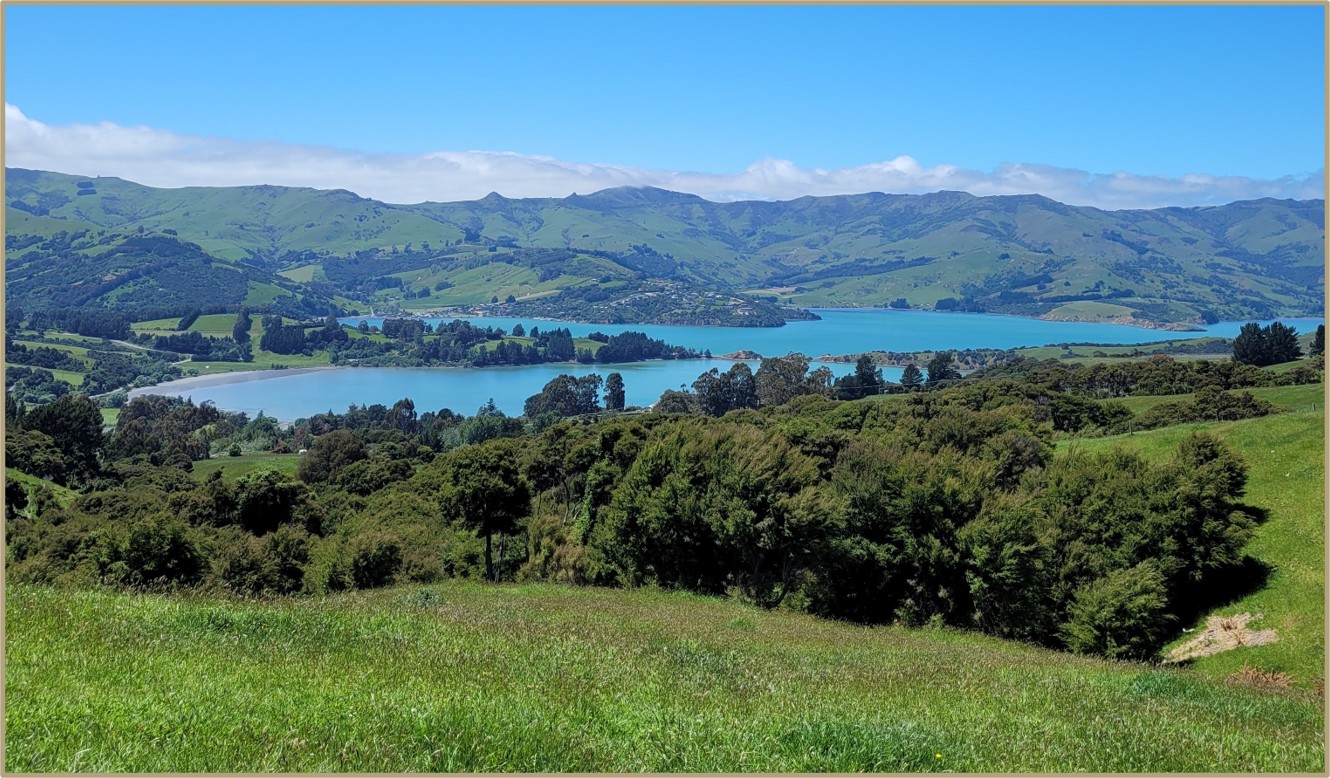
From the water’s edge to the hills, the landscape reveals an environmental gradient shaped by elevation, temperature, and exposure.
So, the team sequenced all the oomycetes they found associated with kānuka trees along a gradient of elevation and rainfall. They successfully mapped a baseline of oomycetes present on and around the healthy trees, but there was just one problem.
“The most dominant oomycetes on kānuka in our native forest, on Horomaka (Banks Peninsula) anyway, are completely unknown to science. As in, we have no idea what they are, not just in New Zealand, but around the world,” John says.
“It’s kind of exciting and kind of scary. But it’s also an opportunity, because we don’t know anything about these things: their identity, what they do, what their impacts could be.”
The researchers realised the oomycete populations decreased as elevation increased, likely due to the drop in temperature. Looking to the future, this means a warming climate could cause an increase in oomycete populations at higher altitudes.
John and his team estimate in 100 years this increase could be up to 3.5x the number of species that are currently found at these higher elevations, which would expose forests to a host of new plant pathogens.
“We don’t know how the oomycetes would react in the new environment; what they might mean for the stability of these forests,” he says.
“But at least now we have a baseline. We have an expectation of how the oomycete populations might change and what the diversity might look like. We can begin to piece together deviations as they occur, rather than being reactive.”
An unexpected academic
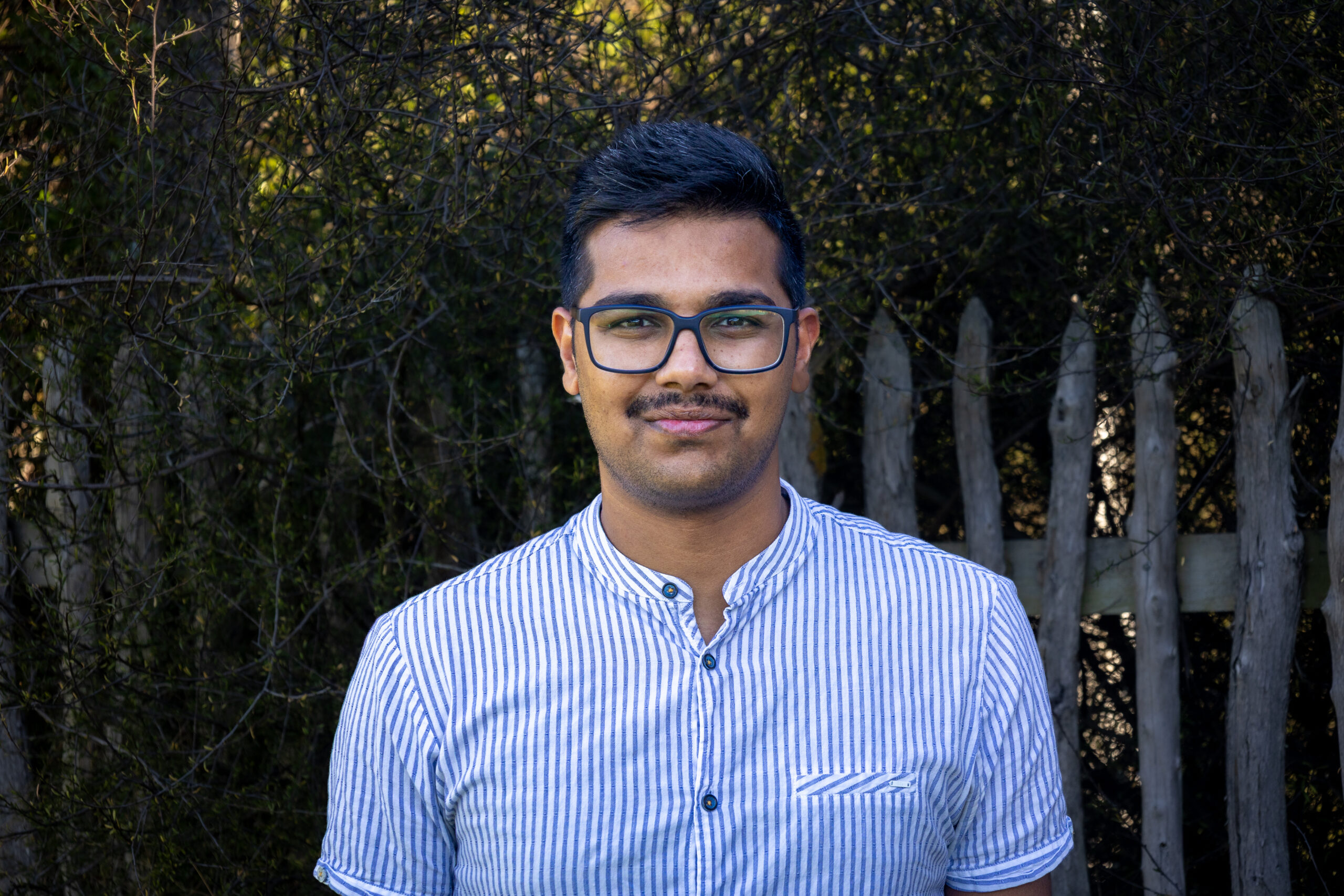
Dr John Ramana, now a co-lead researcher on a project improving how we detect and understand microbial threats across landscapes.
John started off his microbiology journey at Lincoln University, where he discovered he had a fascination for rhizobia.
“Funnily enough, my grades were terrible in undergrad, to the point where my lecturers had to write me an exemption to do my Master’s,” he says. “So I wasn’t super academic, but once I started my Master’s it was just a whole different way of thinking and learning because it was so self-driven.”
After earning straight A’s and graduating with First Class Honours in his Master’s degree, John happily took the opportunity to do a PhD with the Bio-Protection Research Centre.
Once that was finished, doing a postdoc was the next logical step given how interesting he finds the research and how much fun he has doing it. John recalls how surreal it felt when he realized he would be getting paid to do something he considers more of a privilege than ‘work’.
“A lot of people have obviously supported me, which I’m really grateful for. They saw potential in me even when I didn’t see it in myself,” he says.
“Working within Bioprotection Aotearoa has meant I’ve had a really supportive career community. They bring early career researchers together and put value on the things they do, connect them with one another, and build a community. It’s a good vibe.”
Additional Information
- Publication
To explore how climate shapes oomycete communities across plants and landscapes, read Climatic drivers of oomycete communities at plant and community scales.
- Research
To learn more about the research John is co-leading with Professor Ian Dickie on identifying new and emerging microbial threats, explore the project.