Home
Home




Genomic Pest Control
Genetic and genomic approaches to pest and pathogen control
What We're Exploring
This project explores how genetic and genomic tools could improve biocontrol agents by manipulating their microbiomes or those of their target pests. By enhancing the virulence of transmitted viruses or introducing microbes that trigger specific population collapses, this work aims to create more effective and targeted pest control strategies.
Traditional biocontrol has shown success in suppressing pest species, but emerging evidence reveals that pests can evolve resistance or adapt in ways that limit the effectiveness of control agents. To overcome these challenges, the project investigates whether natural enemies, such as parasitoids or predators, can be used as delivery systems for microbial or viral agents that disrupt pest populations more effectively.
For example, the Varroa mite has fundamentally changed honeybee management in Aotearoa, acting as both a vector and a selective pressure for more virulent viruses. This example illustrates how pest microbiomes can shape ecological outcomes and how manipulating these microbiomes might shift the balance back in favour of control.
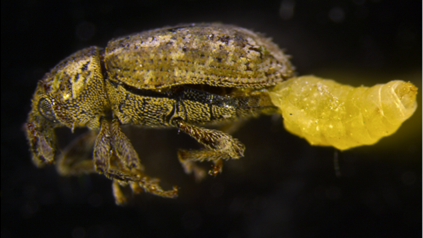
The team is currently analysing the microbiomes and viromes of the Argentine stem weevil and its parasitoid Microctonus hyperodae across different regions. They are also studying historic specimens to better understand viral dynamics in pest populations.
What We're Learning
This project carried out fundamental research leading to novel approaches to pest control for the two pests, the Argentine stem weevil and the Varroa mite. Specifically, the team aimed to modify the microbiome of the two pests. We first developed an understanding of what the microbiome of these species contains, and how it relates to the biology of these species. This led to a series of publications and the discovery of a novel virus. The team then developed microinjection technologies for these species. Attempts to modify the microbiome were successful, but the effects on viral transmission were not spectacular.
Research Projects

Completed
T1 | Genomic Pest Control