 Home
Home



Project Details
Project status
Completed
Research Framework
Pou Tokomanawa
Research Duration
Jan 2022 - Dec 2024
Project Overview
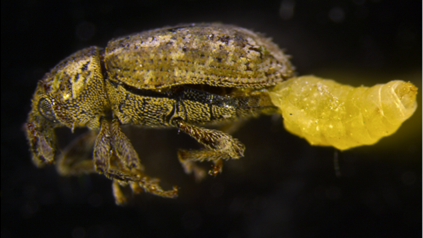
This project involves investigating the microbiome of the biocontrol system involving the pest Argentine stem weevil (ASW) and its biocontrol agent, a parasitic wasp Microctonus hyperodae. Sarah will examine the microbiomes, the bacteria and viruses carried by, ASW and the parasitic wasp, using historic and contemporary samples from around Aotearoa New Zealand.
This research aims to understand why biocontrol effectiveness against ASW has declined, and to develop methods to enhance biocontrol through manipulation of the microbiome. Additionally, the microbiome of the Varroa mite, a parasite of honeybees that transmits viruses and negatively affects honeybee populations, will be investigated and manipulated. The goal is to uncover the role of the microbiome pest control and to develop tools for microbiome manipulation to improve pest control strategies.

Why This Matters
The goal is to uncover the importance and role of the microbiome in invertebrate pest and biocontrol agent species, something often overlooked in other such systems. Having uncovered this, tools can then be developed to manipulate the microbiome of pest or biocontrol agents, to improve current pest control strategies.
Project Objectives
- Investigate bacteria present in ASW, and whether changes in abundance of these species is linked to the decline of biocontrol.
- Assemble a complete genome for the novel virus discovered infecting Microctonus hyperodae, and investigate variation in that genome between historic and contemporary samples throughout Aotearoa.
- Characterise virus load dynamics in Microctonus hyperodae throughout rearing for biocontrol, after release, and after biocontrol decline.
- Investigate the presence of bacterial endosymbionts known to influence virus load in the Varroa mite.
Research Outputs
Journal Articles
- Immune system modulation and virus transmission during parasitism identified by multi-species transcriptomics of a declining insect biocontrol system (2024)
- The venom composition and parthenogenesis mechanism of the parasitoid wasp Microctonus hyperodae, a declining biocontrol agent (2023)
- Chromosome-level genome assemblies of two parasitoid biocontrol wasps reveal the parthenogenesis mechanism and an associated novel virus (2023)
Conferences
- Talk: Viral spillover during biocontrol agent mass-rearing: an overlooked influence on biocontrol efficacy? (2025)
Genetics Society of AustralAsia Conference - Talk: How might we refresh biocontrol agents? (2023)
Genetics Otago Tech Week: Annual Symposium & Workshops Conference - Talk: Transmission of a novel virus in a declining insect biocontrol system (2023)
Genetics Otago Tech Week: Annual Symposium & Workshops Conference - Talk: Predicting successful biocontrol: What we can learn from Microctonus hyperodae genomics (2023)
Genetics Otago Tech Week: Annual Symposium & Workshops Conference
Webinars
- Rethinking biocontrol in the genomics era (July 2025)
Rangahau Rising Webinar Series