 Home
HomeProject Details
Project Objective
Weeds with fleshy fruit are mainly dispersed by birds. Bird-dispersed weeds are often successful at entering into new environments because birds can carry seeds over long distances and deposit them in places well suited to weed establishment and spread.
This research examines when and where weeds occur, with a focus on weeds spread by birds. It explores which ecological or environmental factors are linked to these patterns of spread, and how this information can help predict the likelihood of detecting weeds in specific locations.
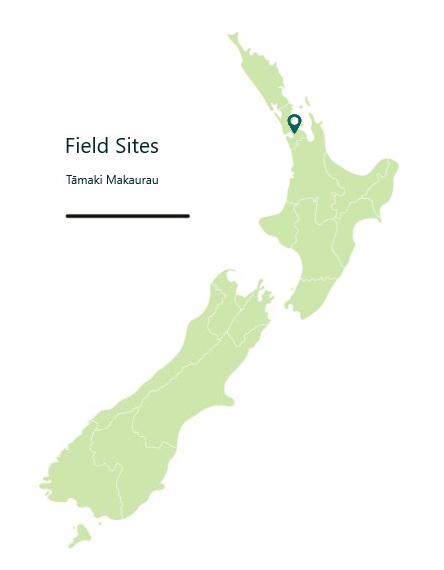
The approach combines spatial modelling with field investigations using seed traps. After eating fruit, birds perch on trees while digesting and then excrete the seeds. This results in concentrated seed rain beneath these trees. Seed traps placed under these ‘perch trees’ collect the seeds, allowing any weeds present to be identified.
The aim is to develop a novel surveillance method using perch trees to support early weed detection and management, before they become difficult to control.
Why this Matters
This research supports individuals and organisations working to protect their taonga, including native forest patches, wetlands, and habitats of taonga species, from weeds.
Weeds are often difficult to manage, especially once they are well established. These challenges are made greater by the more than 20,000 non-native plants species already present in Aotearoa New Zealand, some of which have the potential to become problematic. Weeds are also likely to do well with warming climates, ongoing habitat loss and fragmentation, and increased human (anthropogenic) activity.
If weed issues are not addressed early, before they become widespread, more natural places and species will be affected.
Project Objectives
- Analyse spatial and temporal patterns of fleshy-fruited weeds in Auckland, and determine the ecological and environmental factors that influence these patterns.
- Establish a seed trap trial in urban gardens and urban native forest remnants across Auckland.
- Develop a model to estimate the probability of detecting weed seeds.
- Design and field-test a novel surveillance method informed by the model, and compare its efficiency to detect weeds with conventional surveillance methods.