
 Home
Home23 October 2025
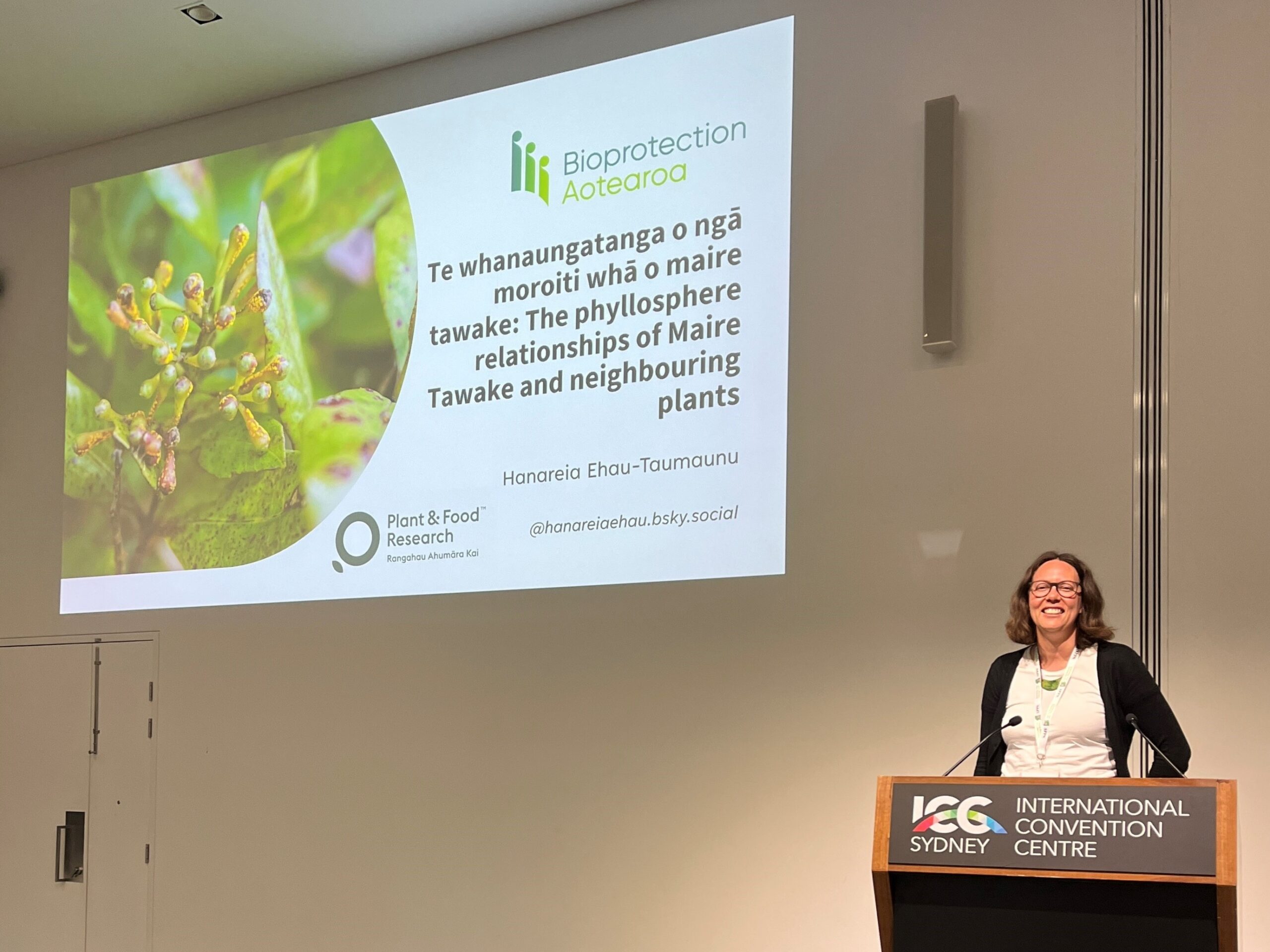
Dr Hanareia Ehau-Taumaunu presenting Australasian Plant Pathology Society Conference 2025
I have been attending scientific conferences since I started my post-graduate degrees over a decade ago. For me, conferences are one of the highlights of being a researcher. They are a place and time where researchers come together to discover, share and discuss the questions we are trying to answer and the impact we have made. I have been to very large conferences, with 10s of 1000s of people, where you get lost trying to find the right room. I have also been to more cosy conferences with less than 100, where I have found passion and curiosity to last me a lifetime.
Conferences aren’t just talks and presentations. There are networking lunches, field trips, gala dinners, skill building sessions, workshops, exhibit halls full of free merchandise, to cultural welcomes and dances. Each conference has its own culture and purpose, and choosing what is best for you, your career, and your interests is key.
Now, I seem to have this knack for choosing conferences that always seem to directly follow one another, and this year was no different. I began my conference season by traveling to Sydney in May to attend and present at the biennial Australasian Plant Pathology Society Conference. As this is main society for my field of research, I always try to attend when possible. I was fortunate to receive an Early Career Researcher Travel Bursary to support my travel to the conference. These bursaries help with all the different costs of attending any conference.

Hanareia’s phyllosphere crew! Fellow kiwi researchers Marion Donald (left) and Evan Kear (right) – who all met for the first time at the 12th International Symposium on Leaf Surface Microbiology in Japan.
After a great week of plant pathology, I spent a quick weekend at home to then jet off again this time to Okinawa, Japan for the 12th International Symposium on Leaf Surface Microbiology. This is a specialist conference that brings together experts from around the world focusing on everything related to phyllosphere microbiology. It only happens every 5 years, so for the phyllosphere researcher community it is like our Olympics.
After a beautiful 10 days in Japan, I returned home to Aotearoa and jumped straight into organising and presenting at the Australasian Myrtle Rust Conference. I was part of the organising committee for the conference, and we were about to see the fruits of our labour from the past 9 months. Despite the jetlag, I mustered all the energy I could to chair a session on day one and then present my research on day two. I then ended my long month of conferences with a wonderful field trip to Rangitoto Island with a bunch of amazing colleagues.
As you can probably tell these conferences represent multiple fields of research, bring together different people from all over the world, and all support my growth. I highly value these opportunities both professionally and personally. Connecting with peers, experts, and potential collaborators is a big benefit of conferences. The conversations that happen around the presentations can create links between projects, form bonds around similar research systems or career stage, to sparking new ideas and curiosity.
During my first few conferences as an emerging researcher, I didn’t really get too involved in such conversations. But with the support of great mentors, conversations are now one of my favourite parts of a conference. Scientists and researchers love to talk about their research so there will always be something to discuss, even in the line for lunch. These conversation are one way I build my research community and I will keep in contact with them through email or follow them on social media. I also reach out went looking for help on a research idea or to share a fascinating article. It is always great to reconnect at the next conference too. The possibilities are endless.
While conferences are about the research, science, and personal connections, they are also about travel and places. Conference have enabled me to travel to places I likely wouldn’t have the chance to visit. I always try to build in time to explore before or after the conference. This can be just a couple of days, or if you are lucky, even longer. Personally, I like to broaden my horizons through cultural exhibits, seeing the sights, and trying the local cuisine. I find that exploring increases what I get out of a conference as a new environment can help me visualise things differently, encourages ethical and cultural awareness, or improves my communication skills for example. It is not quite like a holiday, but its close enough.
At the end of it all, I am usually tired after any conference travel, yet I am invigorated to get back to my research, incorporate my new learnings, and keep my networks alive. So go find the best opportunity for you to attend and present at a conference! When you get there, approach it with an open mind, and enjoy this great part of being a researcher.
More Information
- Webinar | Maire Tawake Resilience
Watch Hanareia’s webinar as she shares insights from her research to enhance the resilience of maire tawake.
Watch her session on demand >>
- Research | Biocontrol Against Microbial Threats
Explore the research Hanareia is co-leading within Bioprotection Aotearoa, developing innovative solutions to protect ecosystems from microbial threats.
Find out more about this project stream >>