
 Home
Home28 July 2025

Beneath the beauty lies urgency. Coastlines, villages, and treasured waters of the Pacific face rising risks. The ICJ’s climate ruling is a call for global accountability to protect places like this.
When the International Court of Justice ruled that states have a legal obligation to reduce emissions and protect the environment, Pacific researchers saw more than a legal milestone, they saw a reflection of the struggle their families and homelands face every day. For a few researchers with Bioprotection Aotearoa and with ties to the University of the South Pacific, this ruling affirms what their research has long made clear: climate justice is not optional, and Pacific voices must be heard at the highest levels. This is their response.
As Pacific researchers and research students at Lincoln University, many of us are former students and staff of the University of the South Pacific (USP), we support this ruling as part of our due diligence to the communities and peoples of the Pacific who live at the frontier of the climate crisis every day. Our work and research in the Pacific Islands are rooted in the responsibility to our homelands, our families, and our futures. This ruling also reaffirms the critical role that research plays in achieving climate justice.
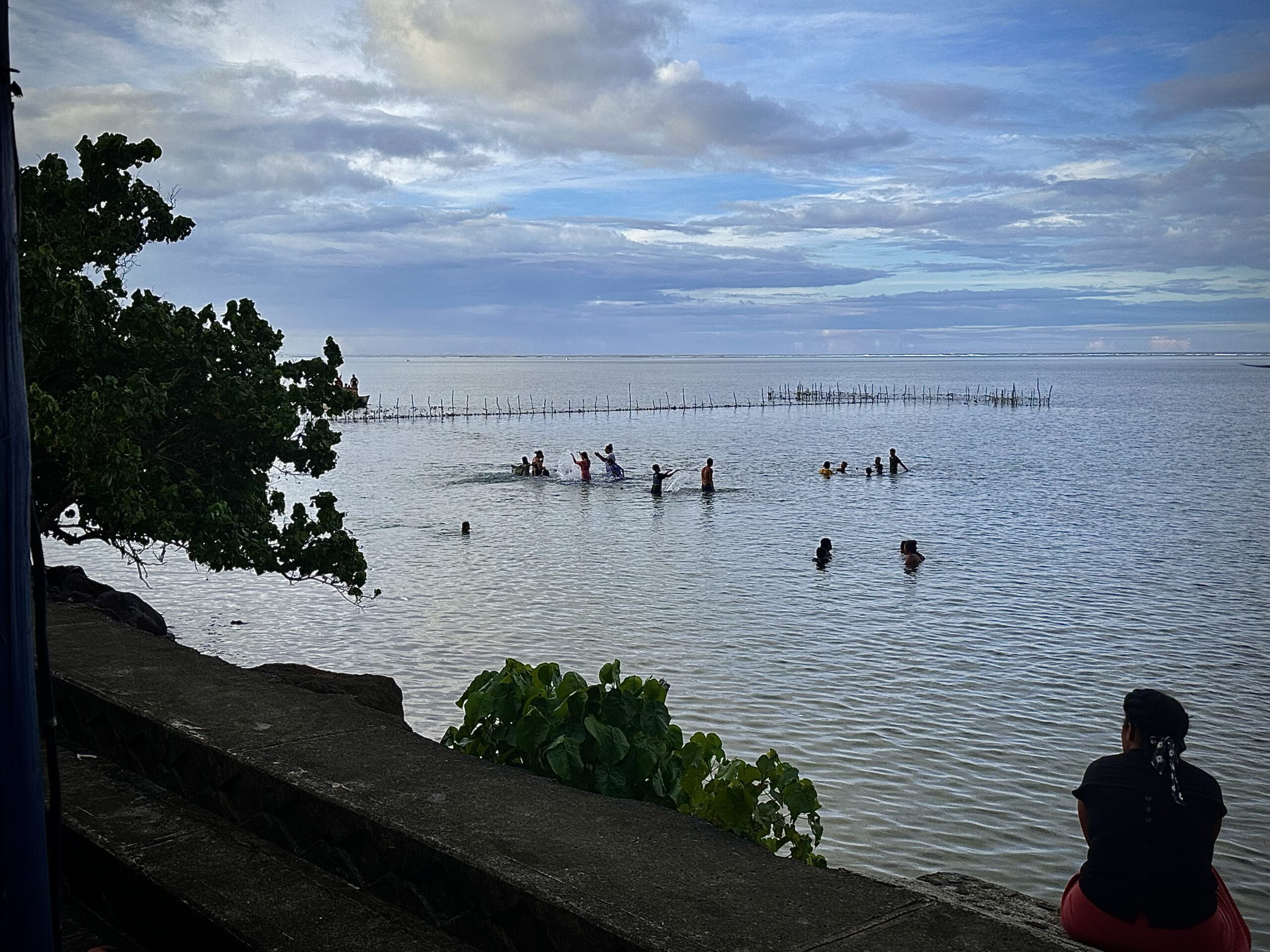
From sea wall to shoreline, from one island to many, traditions, knowledge, and futures are held in these waters.
The UN’s principal judicial body, the International Court of Justice (ICJ), ruled on July 24, 2025, declaring that states have a legal obligation to protect the environment from greenhouse gas emissions, acting with due diligence and cooperation to limit global warming to 1.5°C under the Paris Agreement. The court emphasised that breaching these obligations could result in legal consequences, including reparations, cessation of harmful activities, and guarantees of non-repetition. UN Secretary-General António Guterres hailed the decision as a victory for the planet and climate justice, highlighting the role of youth activism in driving this landmark ruling.
The ICJ based its opinion on states’ commitments under environmental and human rights treaties, asserting that a healthy environment is a precondition for human rights and that climate action is a legal duty for present and future generations.
The case originated from a 2021 initiative by Vanuatu, inspired by Pacific Island youth, seeking clarity on states’ environmental obligations under international law. A movement started six years ago by students from the University of the South Pacific (USP), brought forward by Vanuatu (since Vanuatu hosts Emalus USP Law Campus), supported by Pacific nations and youths. There are still many moving pieces, but anything that we do for the climate is a win, despite the current global political volatility.
Despite advisory opinions being non-binding, the ICJ’s ruling carries significant moral and legal weight and holds states accountable for climate harm. The court rejected arguments that the Paris Agreement alone governs climate obligations, citing broader treaties and principles such as the principle of intergenerational equity.
Climate-vulnerable nations, including the Pacific Islands, Small Island Developing States (SIDS), and developing countries, celebrated the decision as a tool for justice. At the same time, experts noted its potential to inspire lawsuits and shape global climate policies. The ruling underscores the urgency of coordinated action and the need for human and political will to address the existential threat of climate change.
From reef to rainforest, coast to cloud forest, the authors of this piece share glimpses of their different but connected fieldwork as Pacific researchers working to protect their island homes.
-

- Dr Suli Vunibola (Co-lead of Resilience for Pacific Communities) at a field site in Samoa
-

- Mesu Tora (BA PhD candidate) at a field site in Fiji
-

- Patrick Sakiusa Fong (BA PhD candidate) at a field site in Tonga
-

- Mathew Taitusi Saukuru (Aligned PhD candidate) at a field site in Fiji
More information
Articles about the International Court of Justice decision
Nations who fail to curb fossil fuels could be ordered to pay reparations, top UN court rules
World Court says countries are legally obligated to curb emissions, protect climate
International Court of Justice climate ruling a powerful tool for holding countries to account
Exploring our research from Resilience for Pacific Communities with Bioprotection Aotearoa
Resilience Agroforestry for Pacific Communities
Role of microbial communities in agrobiodiversity resilience