
 Home
Home20 April 2026
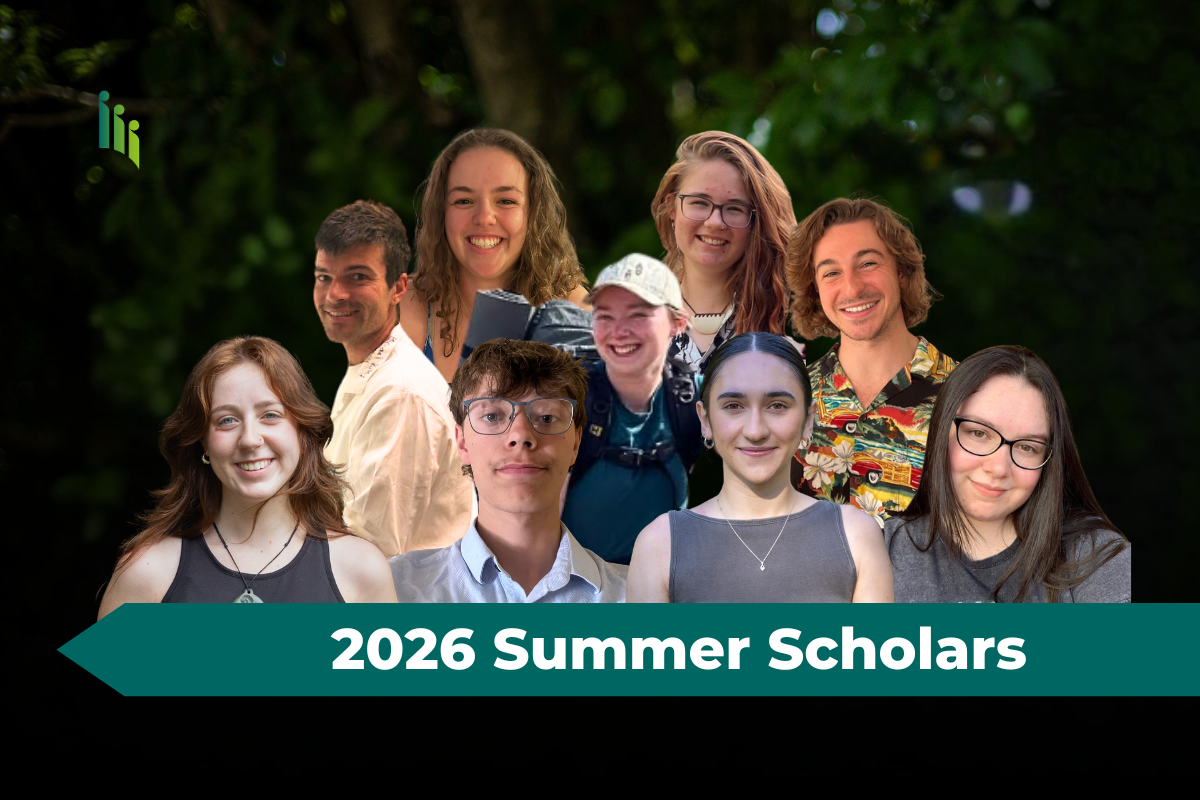
Nine Summer Scholars presented their work, from top left: Rose Thompson, Amie Cummack, Michael Riley, Jessica Przychodzko, Tim Thevenon, Autumn Lindsay, Harry Norris, Jaymee Anahera Shadbolt, and Katelyn Rose Young.
The 2026 cohort of Summer Scholars presented findings from a summer of research on biological threats at an online event hosted by Deputy Director, Dr Sylvia Nissen (Lincoln University).
“We had fantastic presentations from our scholars throughout Aotearoa,” said Dr Sylvia Nissen, “and a great range of research projects, spanning from the microbes that support the resilience of forests, to evaluations of the biosecurity system itself.”
The Summer Scholarship programme is an annual internship coordinated by Bioprotection Aotearoa to support the next generation of researchers into mentored research experiences. Each year, undergraduate students are paired with a bioprotection researcher to work on a real-world field, lab, or literature project over ten weeks.
“It’s been really amazing,” Jaymee Anahera Shadbolt said about her project and mentorship team. Jaymee reviewed legal and academic literature to understand if the current biosecurity system allows for Māori authority in bioprotection decisions.
“All in all, every step that I was exposed to demonstrated to me how applied plant pathology integrates field ecology, laboratory experimentation, and molecular tools, giving me a better perspective of how science is applied in the real world,” said Michael Riley. Michael evaluated biological controls for Phytophthora and Colletotrichum, two plant pathogens.
The programme creates the conditions for rigorous yet rewarding experiences to encourage students to pursue their interest in science careers.
Tim Thevenon explained, “As a young scientist, it was an invaluable experience to be exposed to the whole scientific process.” Tim researched differences in kānuka ectomycorrhizal fungi between drought, flooded and mesic conditions.
“It was great fun, I had a blast,” said Harry Norris of his investigation into Pheidole megacephala as a potential genetic model for control of invasive Hymenopterans.
Watch all Summer Scholar presentations on YouTube:
Te Kete Aronui: The science journey continues
For the first time this year, Bioprotection Aotearoa will support four Summer Scholars to continue their learning journey in science or related fields with a Kete Aronui Award.
“The passion and quality of our Summer Scholars’ presentation was the inspiration behind establishing this award,” said Director Amanda Black. “We hope this award can support them to continue their journey in bioprotection pathways and hopefully postgraduate studies.”
Within te ao Māori, Te Kete Aronui is one of the three baskets of knowledge retrieved by Tāne, representing knowledge grounded in observation, creativity, reflection, and connection to the environment. It reflects a way of learning that goes beyond technical ability, recognising the importance of purpose, people, and place.
Stay tuned for an announcement of our four Te Kete Aronui Award recipients.
2025-2026 Summer Scholars:
1. Amie Cummack, University of Auckland
Shady characters: traits of recently naturalised plant species in Aotearoa
2. Harry Norris, University of Otago
The use of Pheidole megacephala as a genetic model for other Hymenoptera
3. Tim Thevenon, University of Canterbury
Ectomycorrhizal colonisation of kānuka trees in drought and flooding treatments
4. Autumn Lindsay, Victoria University of Wellington
Ectomycorrhizal morphological diversity in Pinus radiata
5. Katelyn Rose Young, University of Canterbury
Diversity of Xanthomonas arboricola pv. pruni (Xap): from DNA to disease
6. Jaymee Anahera Shadbolt (Ngāi Tahu, Ngāti Kahungunu, Ngāti Porou, Te Arawa), University of Canterbury
Kia whakatōmuri te haere whakamua: recognition without authority in biosecurity governance and decision-making in Aotearoa
7. Michael Riley, Toi Ohomai Institute of Technology
Screening novel agents for control of forest nursery pathogens
8. Rose Thompson, University of Otago
Sex determination using doublesex and transformer in Polistes dominula
9. Jessica Przychodzko, Lincoln University
The wrong pitch: is biosecurity information too complex to understand?
10. Martina Kassandra Reinbach, University of Auckland
Reducing populations of invasive Vespula wasps in the Waitākere Ranges
Additional Information
- Kete Aronui Award
Our four Kete Aronui Award recipients have been announced.
Learn about the Kete Aronui awardees >>
- 2026 – 2027 Summer Scholarships
We regularly share bioprotection insights and upcoming opportunities with our newsletter subscribers. To be the first to hear when the next round of Summer Scholarships opens, sign up for our newsletter.
