
 Home
Home28 April 2026
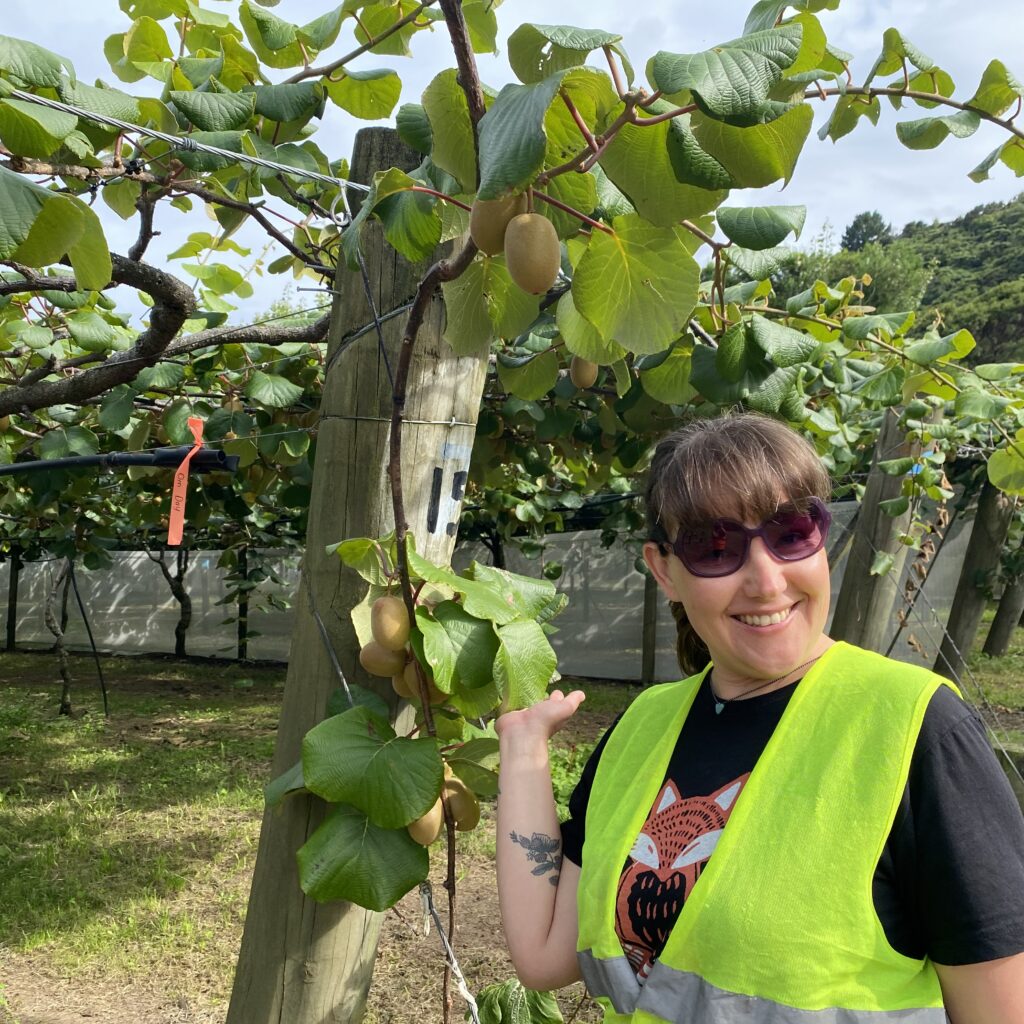
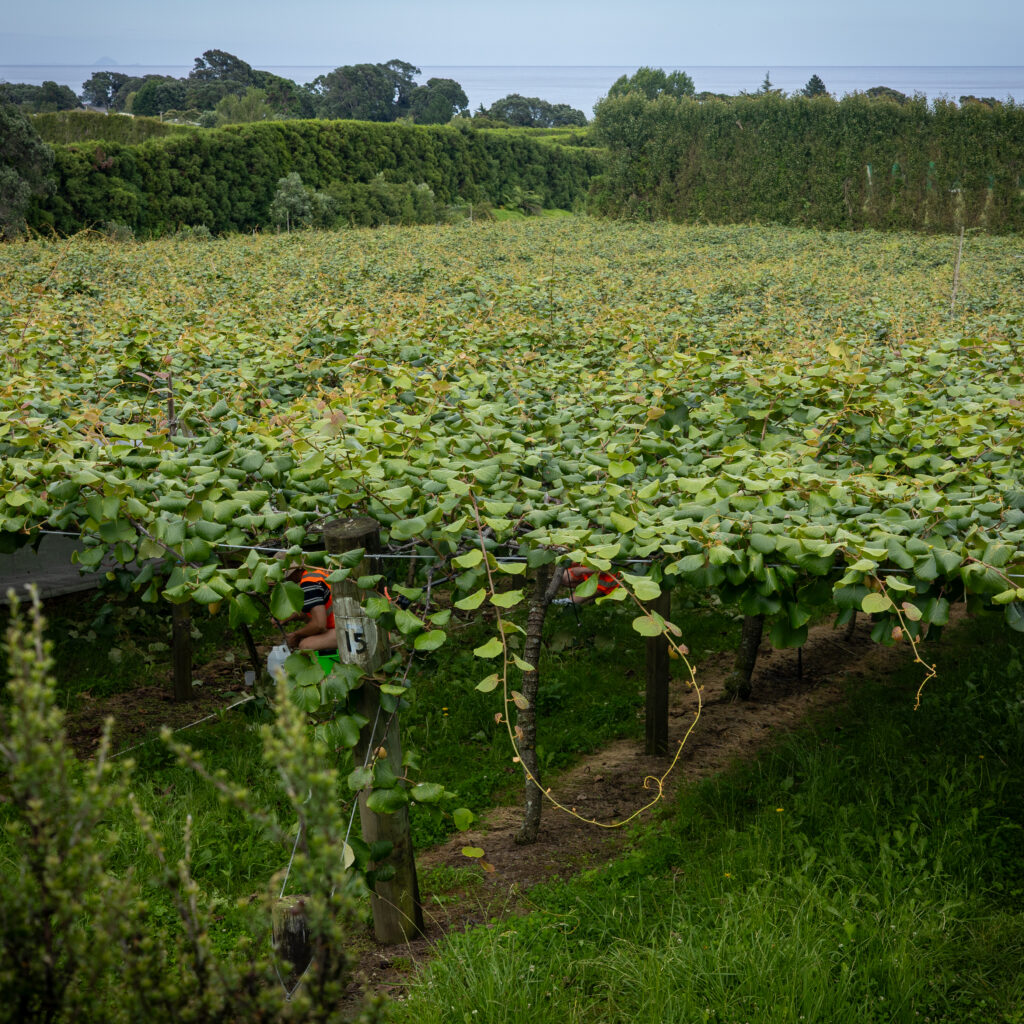
PhDs are a journey. Polina’s journey was longer than most, but it has delivered fascinating new knowledge that may be useful in future fights against Pseudomonas syringae pv actinidiae (Psa), the disease that impacts kiwifruit. It is also a journey that led Polina to an emerging career in research, which is what she really wanted.
Polina successfully defended her PhD in February and is graduating in May.
“It’s a big relief,” says Polina. “It was a big chunk of work.”
Originally from Israel, Polina came to New Zealand almost four years ago to start her PhD. Her start date was delayed due to COVID, so the May graduation day will be exactly six years from when she got confirmation of her acceptance to the position.
Evolving goals
The overarching goal of Polina’s PhD was to explore the bacterial communities that naturally colonise kiwifruit leaves—in other words, the kiwifruit microbiome.
For her first chapter, Polina conducted a community sequencing study comparing bacterial communities in kiwi orchards surrounded by native bush with those surrounded by agricultural fields. By comparing communities, Polina was hoping to discover whether nearby native plants help recruit bacteria that are more beneficial for the plants.
Although the communities she compared did indeed have differences, the differences were small. Instead of continuing her investigation at a community level, Polina decided to zoom in and isolate individual bacteria that might be antagonistic to the pathogen Pseudomonas syringae pv. actinidiae (Psa).
“I collected bacteria, identified them to a genus level using Sanger sequencing, and screened them against Psa,” says Polina.
One screening method she used was to test how Psa behaved in the presence of a neighbouring bacterium on the same petri dish.
“I found a few strains that were actually inhibiting Psa,” says Polina.
Psa has a highly developed chemosensory system that enables it to easily sense nutrients. On its own, it will move several millimetres a day towards nutrients.
“On the leaf, Psa enters the plant through the stomata,” says Polina. “It has this ability to sense those nutrients inside the leaf and enter the leaf.”
However, in the presence of several specific bacteria that Polina isolated, it moved more slowly and, in some cases, moved around the neighbouring strain, as if Psa was avoiding direct contact with its neighbour. When some of Polina’s bacterial antagonists were present in high concentration, Psa would not move towards nutrient sources.
“It was able to swim, it just didn’t seem to locate the nutrients and swim towards them.”
For Polina, this was the most exciting finding of her PhD.
“The bacteria I found probably won’t stop the disease completely, but at least they slow it down.”
A balancing act
PhDs generally have three substantial research chapters. Polina’s second chapter, which resulted in the most impactful discovery, took her much longer than she expected. With six months left to go on her PhD, Polina decided that the best balance between time, investment, and outcome was to conduct a whole genome sequencing of six of these interesting bacteria species.
Now that she’s finished with her PhD, Polina is currently working to publish two short papers announcing the sequencing and assembly of the genomes of these bacterial Psa antagonists.
“I don’t know if they’re native to New Zealand, because we isolated them from kiwifruit, so they might be present on kiwifruit in other areas as well,” says Polina. “We can’t tie them to known species, but to prove that they are new species would require further investigation.”
While she works on getting those papers published, Polina is continuing as a research assistant in the same lab where she completed her PhD.
“I’m studying another plant pathogen, Phytophthora agathidicida,” she says. “I am working with the team to explore compounds that may inhibit it.”
Finishing a PhD can bring up a range of emotions. Polina’s main emotion seems to be that of contentment.
“I’m happy to be a part of meaningful research.”
Additional Information
- Research
To learn more about Polina’s PhD on the kiwifruit microbiome, visit her research page.
Learn more about the research >>
- Podcast
Listen to our podcast Under the Lens to learn more about bioprotection against the pathogens Psa (episode 02) and Phytophthora agathidicida (episode 03).