
 Home
Home11 February 2026
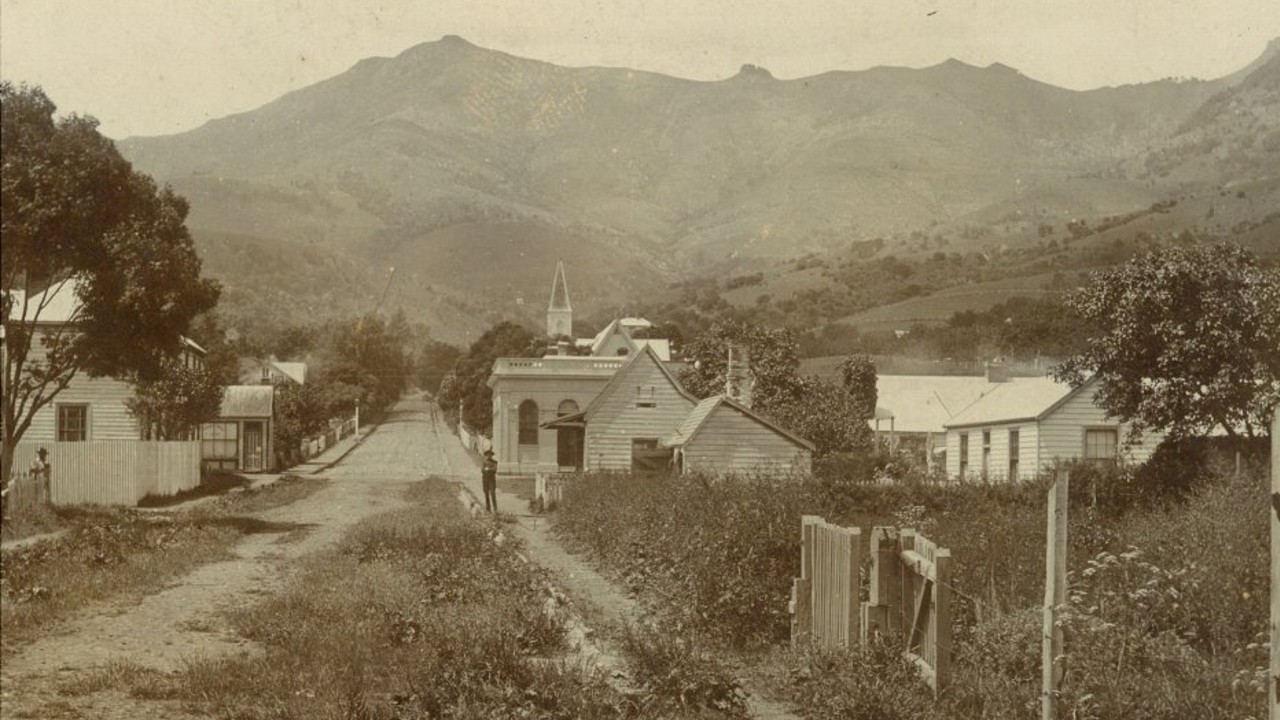
Balguerie St., Akaroa. Conway Murphy, c.1890-1904. Gift of Nigel Harrison, Akaroa Museum collection, AK:2004.46.3
Throughout my life, I have always been interested in history. In my previous work researching public services in Aotearoa, I focused on interrogating the processes and practices that occurred in the past and led to our contemporary social infrastructures such as public libraries, and their possible futures.
As a political geographer interested in temporalities, I aim to draw these throughlines in my work from the past, through the present, and into the future.
My first major piece of work I am taking on as part of the Bioprotection Futures Project takes this approach to understanding our contemporary biosecurity system and its possible futures – by turning directly to the past.
Through focusing on Horomaka Banks Peninsula my current work traces how weeds and pests first emerged as threats in Aotearoa New Zealand. Looking at the historical emergence and attempted management of many pests and weeds will allow us to look critically at our biosecurity system from an objective distance – offering lessons to take into the future.
To do this, I am reconstructing narratives of more-than-human, multi-species belonging through archival research between the years of 1825-1925. This was a period of extreme political and environmental transformation on the peninsula and set in motion many of our current and ongoing biosecurity concerns.
My work aims to illustrate which species are seen as belonging on the peninsula during this period, and which are understood instead as “pesty” or “weedy”, and therefore “out-of-place”.
I trace emerging weeds and pests through a range of sources including newspaper articles, Kareao (the Ngāi Tahu Archive website), Waitangi Tribunal Reports, colonial correspondence (both British and French), and other local histories and records. These sources are key to being able to understand environmental change across Horomaka, as well as the shifting understandings of the presence of numerous different species there.
As part of this process, I have been very lucky to access many specific collections of local archives and museums. In particular, in this research I have been greatly assisted by the important work and generosity of Dan Smith, the curator and Collection’s Manager of Akaroa Museum, and that museum’s incredible collection.
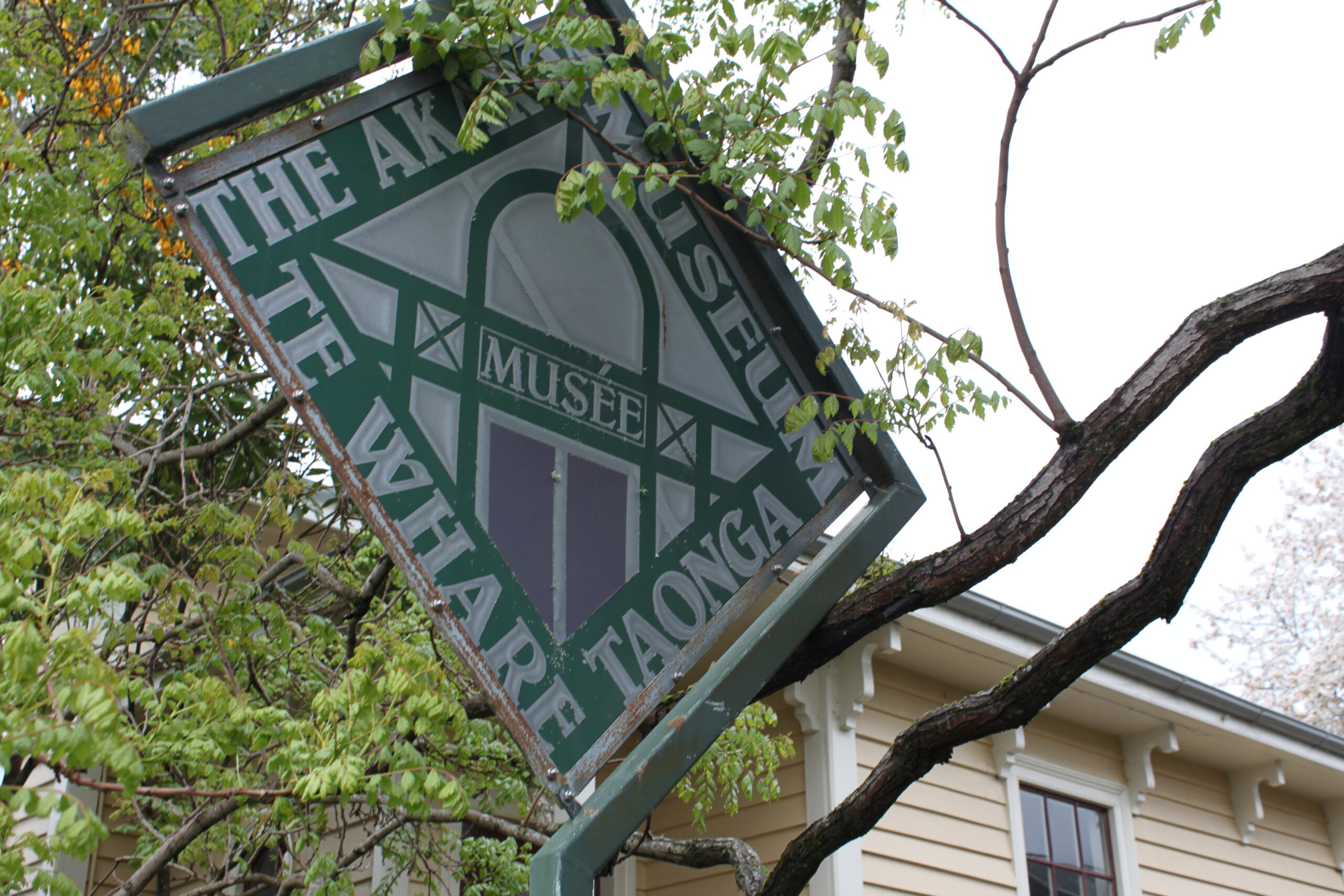
Te Whare Taonga, the Akaroa Museum.
Museums, archives and their specialist curators and librarians are often neglected allies in the practice of scientific research. With Dan’s help I was able to trace different species through the pages of local records (including County minute books, early settler diaries and histories, farm records) and additionally to visualise the history of various pest and weed threats on the peninsula. Digitised images from within the museum’s collection illustrate the historical proliferation of weeds and pests in Akaroa in stark ways.
Collaboration with librarians, curators and archivists across my research always allows me to dig into the history of specific places. It adds significant depth and breadth to the work I do, and engages with the temporal shifts of ideas, practices and processes in place.
Building on the research I have undertaken so far it is already becoming clear that pest management strategies, and broader ideas around species belonging on Horomaka have changed very little since the 19th century.
The process of tracing ongoing attempts at controlling and managing species on the peninsula over a 100-year period has illustrated how the roots of our biosecurity system and processes still directly inform our current management approaches.
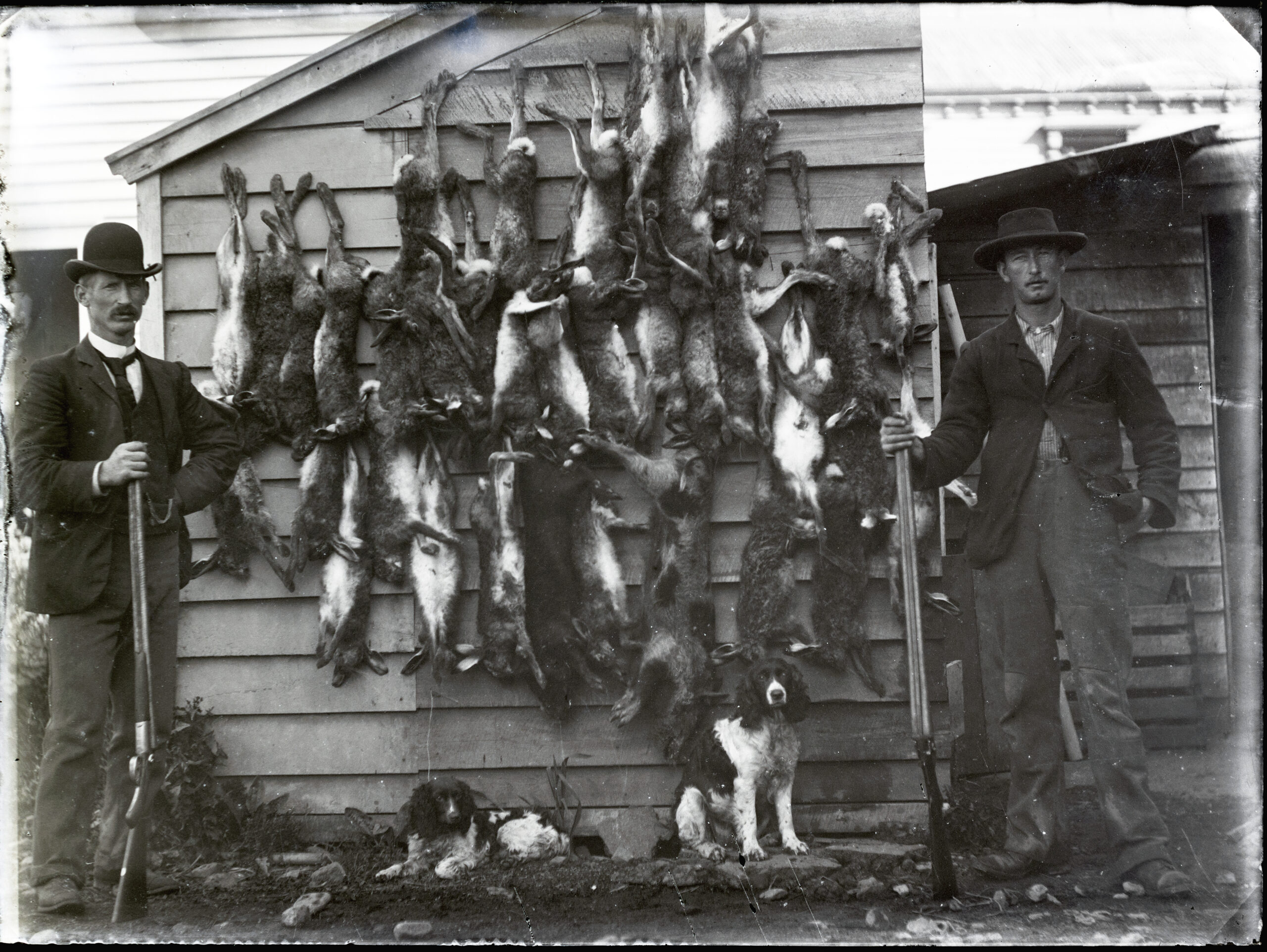
Hunting party. T.E. Taylor studio, 1896-1910. Gift of Jan Shuttleworth, Akaroa Museum collection, AK:2023.14.4.8
Archival and historical research has given me a broad scale at which to understand biosecurity, with the benefit of hindsight. It illustrates the repetition of strategies such as the continuing management approach that targets each individual pest or weed threat separately, in isolation from other species.
This research has clearly illustrated the underlying logic of our historical biosecurity system, as something set up to attempt to maintain monocultural agricultural production, largely for export.
This historical work aims to set the Bioprotection Futures team up well to turn to the concerns of the present, and the future – buoyed by knowledge of how we got here.
Additional Information
- Research
To learn more about the research Dr Salene Schloffel-Armstrong is co-leading on the historical roots of the biosecurity system, explore the project.
Learn more about the research >>
- Bioprotection Futures
To explore other projects understanding how bioprotection is imagined and enacted in Aotearoa to support future-ready responses, visit the project stream.