
 Home
Home19 August 2025
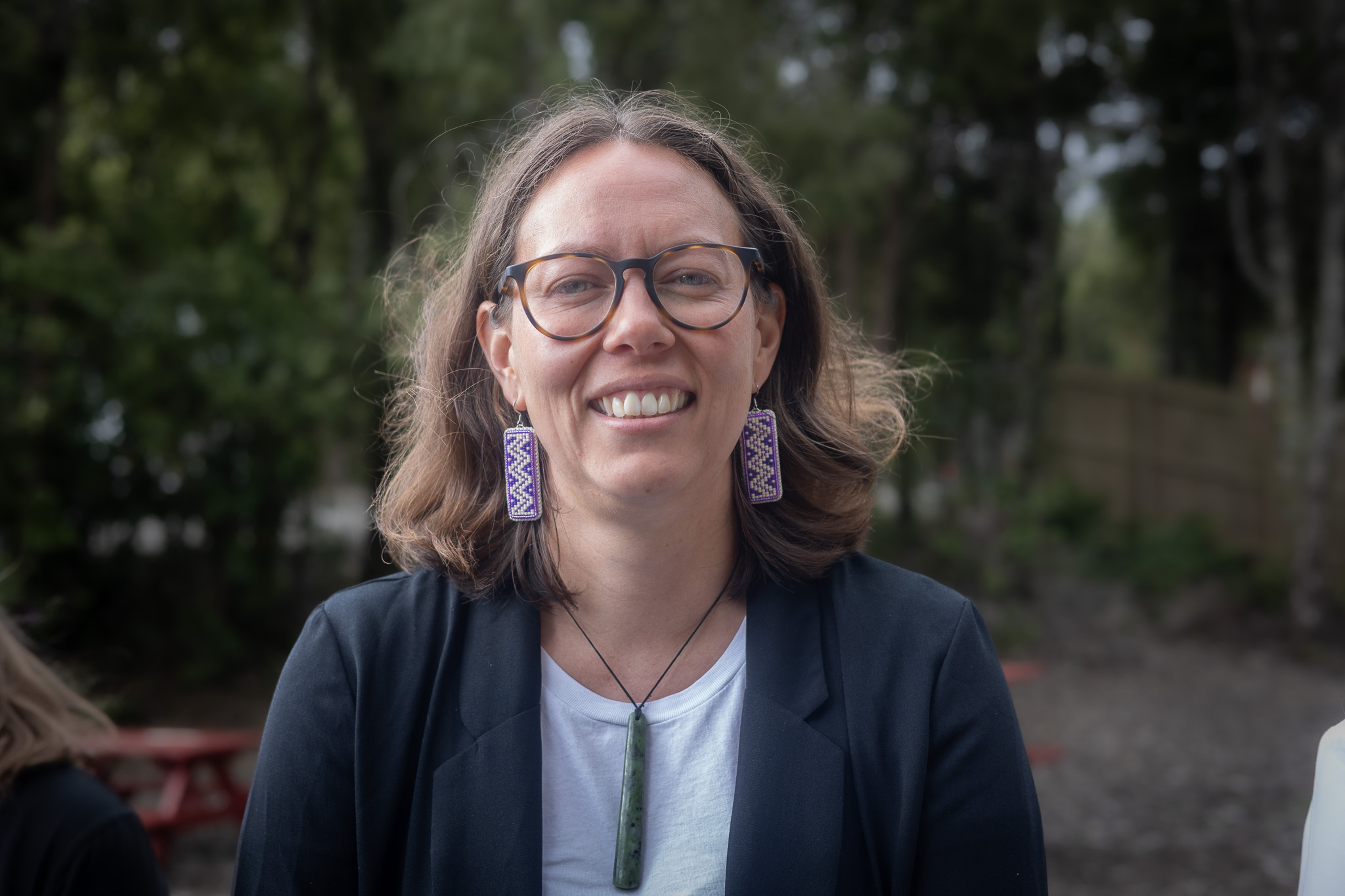
Dr Hanareia Ehau-Taumaunu transitioning from postdoctoral fellowship to co-leadership
Hanareia Ehau-Taumaunu (Ngāti Uepōhatu, Ngāti Porou, Te Ātiawa, Te Whānau-ā-Apanui, Ngāpuhi) has been with Bioprotection Aotearoa (BA) since before it was born. After initially completing her Master’s with BPRC (the predecessor of BA) Hanareia joined Pou Recloacking Papatuanuku in Tranche 1 for a postdoctoral project.
When she joined the pou, Hanareia found herself in the fortunate position of being able to design her own postdoc. One thing she knew she wanted to work with was myrtle rust.
“I kept getting the calls from home telling me about plants that were in trouble and trees dying on the coast,” says Hanareia. “I thought, I’m a plant pathologist. I should be able to do something that can help.”
While Hanareia knew about myrtle rust, she first learned about the tree that would become the focus of her research during a meeting to iron out the details of her project.
“I left that meeting knowing the name of a tree – maire tawake,” says Hanareia. “Only later did I learn it was only found in these disparate swampy areas across the country. But I’ve fallen in love with it anyways.”
Hanareia has been exploring the microbiome of maire tawake and what connections there might be between the maire tawake microbiome and the microbiomes of neighbouring trees. By sampling trees around maire tawake, she has been able to determine what microbes they have in common, allowing her to understand whether it’s the tree that’s selecting its microbiome or whether it is coming from the environment
“Trees aren’t insular, they share a lot,” says Hanareia.
Hanareia has also been looking at how the microbiome shifts between asymptomatic trees and those with symptoms of myrtle rust infection. She’ll be talking all about this research in her upcoming webinar.
Transitioning from Fellowship to Co-Leadership
Hanareia is nearing the completion of her Postdoctoral fellowship and has stepped into a new role as co-lead of Biocontrol Against Microbial Threats within Pou Tokomanawa. Another new role for her is that of supervisor – Hanareia’s first student has just started in the last few weeks.
“I’ve moved from being a student to being a bit more of an independent person to now being the person who is supporting the next generation,” says Hanareia.
Working with co-lead Peter Fineran, this project will investigate how different combinations of bacteriophages (a promising tool to control harmful bacteria) perform in complex microbial communities.
“The pathogens that we’re looking to control are some of the pathovars of Pseudomonas syringae that cause disease in cherry,” says Hanareia. “It will involve a lot of learning about cherry because not a lot has been done on its microbiome.”
While Hanareia appreciates the opportunity to learn about a biocontrol system that is new to her and contribute new knowledge through research, she is at least as excited for the opportunity to step up into leadership.
“Taking more of a leadership role, not just being the scientist who’s tagged along, is a new undertaking for me,” says Hanareia.
More Information
- Webinar | Maire Tawake Resilience
Watch Hanareia’s webinar as she shares insights from her research to enhance the resilience of maire tawake.
Register now, or watch her session on demand >>
- Research | Biocontrol Against Microbial Threats
Explore the research Hanareia is co-leading within Bioprotection Aotearoa, developing innovative solutions to protect ecosystems from microbial threats.
Find out more about this project stream >>